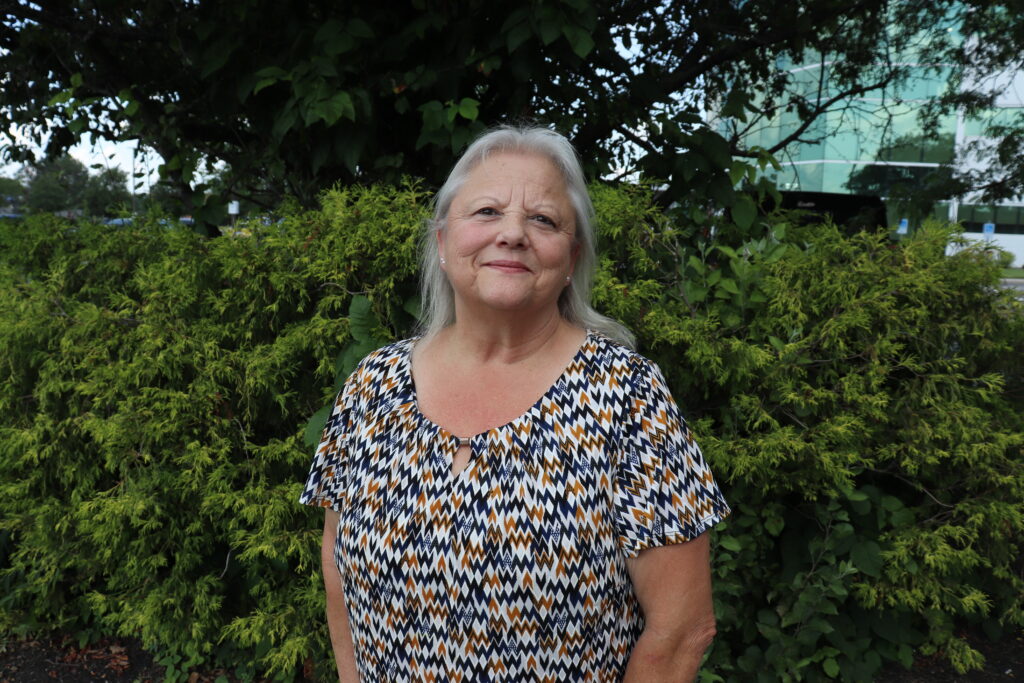
As a childcare professional and mother who up grew food insecure in Nairobi, Kenya, Susan Perez takes great pride in caring for the young kids at her in-home daycare center. Looking after the little ones isn’t just about being a good caregiver. For Susan, it’s about giving them chances she didn’t have.
“I’ve caught children sneaking bananas from my kitchen, eating them while they’re using the bathroom, and then trying to flush the peels down the toilet,” Susan said. “I was a hungry child, a child who was starving, and I want these children to know there’s something to eat whenever they need it.”
As a licensed childcare provider, Susan looks after six kids at a time out of her home in Columbus’ Franklinton neighborhood. Many of the children’s families are poor. The meals some kids get at daycare might be their only food of the day, she said.
At the same time, Susan occasionally experiences food insecurity herself. Some of her customers can’t always afford daycare. Others rely on public childcare benefits that can be lost if a parent changes jobs. In the months when work is scarce and money is tight, she shops at local food pantries to make ends meet for her family.
“I give back to the community by taking care of the children, but then I can get help as well when I need it,” Susan said. “That’s the beauty of America, and there’s nowhere in the world I would rather be.”
Susan was the middle child of seven. Her mother worked and lived in Nairobi’s slums. The family was desperately poor, and the kids would often go days without eating. Her mother would use a single bucket of water to wash the children one after the other.
One day, Susan’s mother didn’t come home. She and her siblings dug through trash to survive until one of them had an idea. Carrying everything they owned in a single pillowcase, the children walked to a police station in the middle of the night.
“We heard when you were in jail, you got free food,” she said. “We told them we were really bad kids. We asked them to arrest us.”
Instead, the officers fed the children and took them to an orphanage run by American missionaries. Susan remembers walking into the building late at night and meeting the agency’s director. The woman wept at the sight of the dirty, skinny family. Susan, who’d never met a white person before, wasn’t sure how to respond.
“I remember telling my brother, ‘White people are weird. Is this how they say hello?’” She said, laughing at the memory.
Susan and her siblings took the first real bath of their lives that night. They started school soon after, and with three meals a day, their health improved over the following years. One by one, the siblings aged out of the program.
In her early 20s, Susan started a small business in Kenya cooking food for school children. A neighbor told her about a full-time nanny job with a wealthy family from the Middle East. The job, which took her to Washington, D.C., paid well but was never a good fit. Susan was let go without notice. Alone in a foreign country with no place to go, she took a leap of faith.
“I asked a taxi driver to take me to the bus station. The next bus was going to Columbus, Ohio,” Susan said. “I’d never heard of Columbus before that point.”
When she arrived, Susan met fellow immigrants from East Africa who helped her get settled. She became a U.S. citizen in 2009. In 2011, she met her husband Jose and took his last name. Now, she’s been a licensed childcare provider for several years.
Even after everything she’s been through, it can still be hard to be open about her use of food pantries. She’s sensitive to how her family might feel if they knew.
“I’ll take Kroger bags and put the food in them, so it looks like I came from the grocery store,” she said. “At the same time, I shop at the pantry with pride because I know my family will not go hungry. There will always be a meal on the table.”
More than anything, Susan feels gratitude for the hunger relief system in the country she now calls home. Kenya didn’t have food banks or pantries while she was growing up, she said, but the U.S. does. It shows that Americans look out for one another. Even when work is scarce, pantries make it possible for her to keep going.
“I’m grateful for the volunteers, the workers, and the donors who make these pantries what they are,” Susan said. “Even if I don’t have a penny in my pocket, I know I’ll have something to eat, and that to me is priceless.”