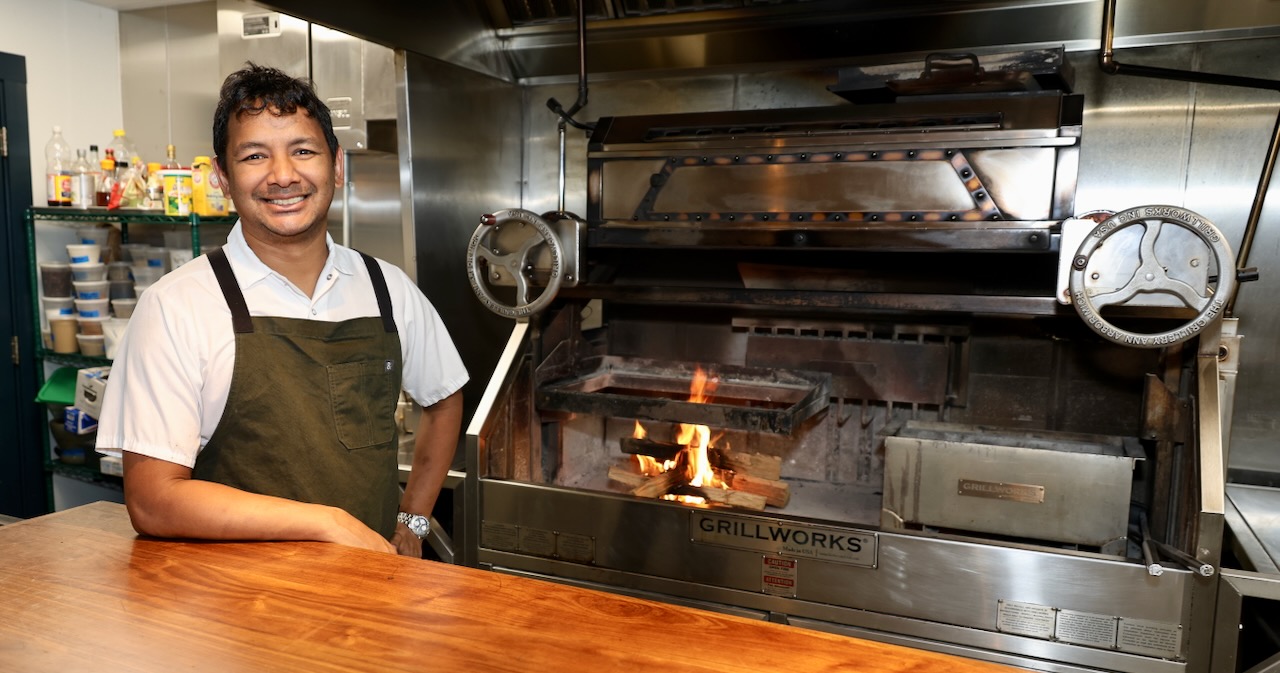
By any measure, Avishar Barua has made it in the world of food.
After training at the Michelin-starred WD~50 in New York, he became executive chef of Service Bar in Columbus, competed on season 18 of Bravo’s Top Chef, and won big on Food Network’s Beat Bobby Flay. Now, he owns the restaurants Joya’s and Agni in central Ohio. Just this year, he was a James Beard award semifinalist.
But ask the Columbus area native about his favorite food memories, and you’re as likely to hear about Salisbury steak as filet mignon. For him, food has been many things besides a career. It’s been a chance to stay true to his roots and help the community that’s shaped his life.
“Columbus built me. I want to give back,” Avishar said. “Some people think if you can’t give a million dollars, then you shouldn’t give at all. But if you can feed someone, then you do that. You can give them your time, which is one of our most valuable resources.”
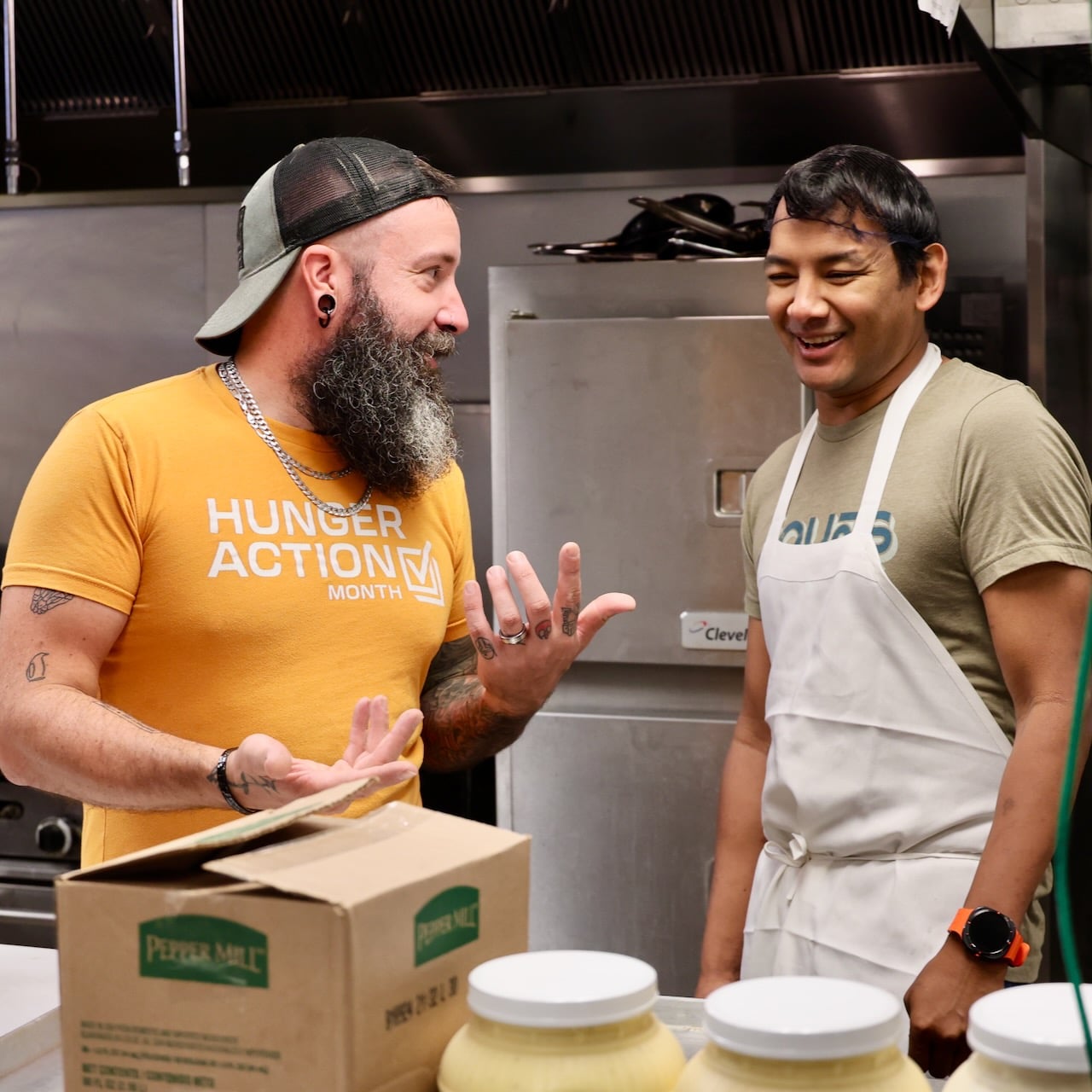
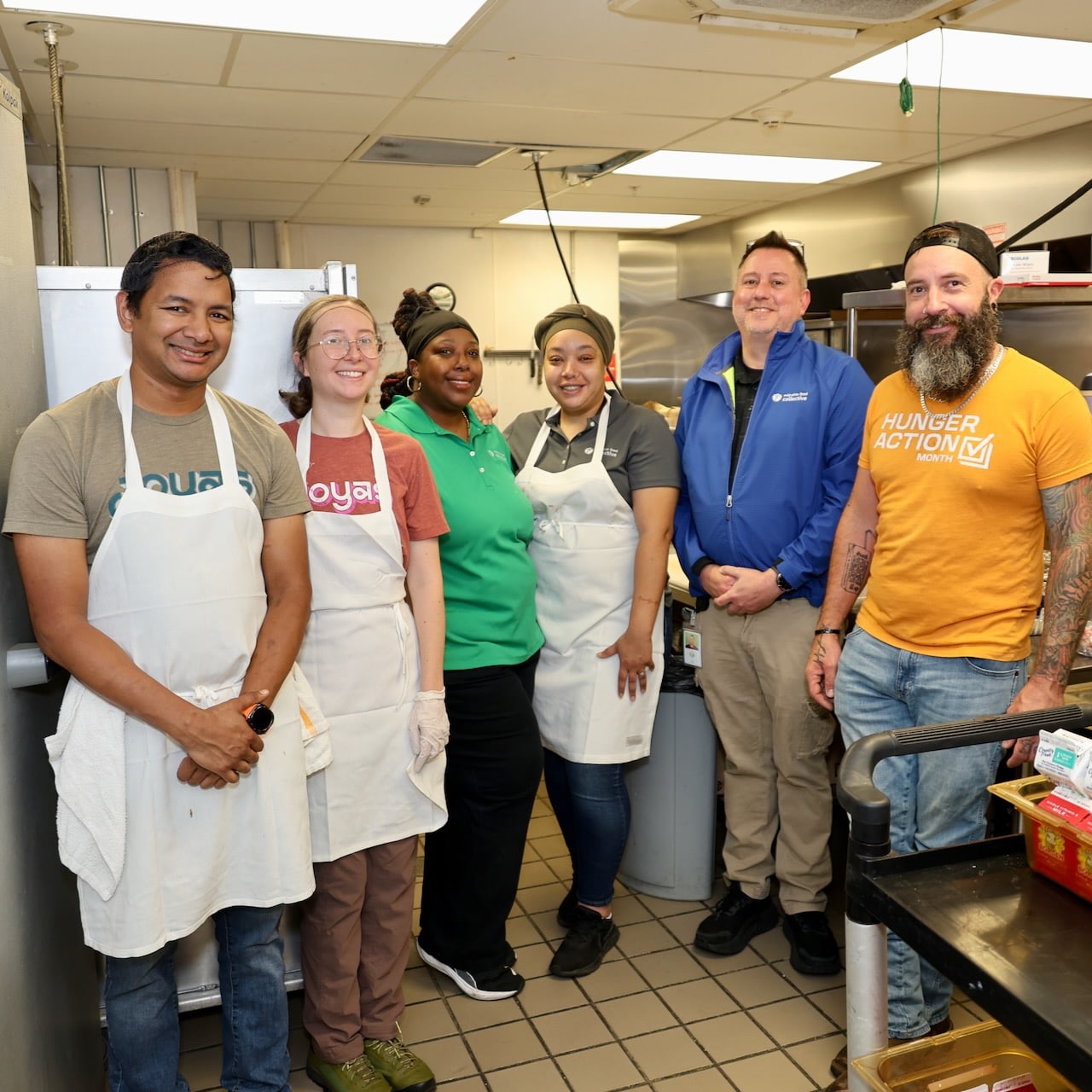
In September 2024, Avishar worked his first volunteer shift at the Mid-Ohio Kitchen at Reeb, a free community meal site run by Mid-Ohio Food Collective (MOFC). The kitchen and cafe serve all comers—thousands every year—and are just one part of MOFC’s direct feeding operations.
In 2023, Reeb and MOFC’s other kitchen operations collectively served more than 414,000 meals (almost 8,000 a week). The operation relies on volunteers like Avishar to prep ingredients and keep the food flowing. And for him, it’s just the latest way of giving back using his skills in the kitchen.
“A rule for me is to try to leave things a little bit better than I found them. Chefs like to look out for people,” he said. “A person may need food, water, and shelter. Well, I can do food. When you make food, you can make someone’s day a little better, and that’s an act of service.”
Originally from the Columbus suburbs, Avishar’s take on food has been shaped by many things: His parents’ Bengali heritage, collecting canned goods for Faith Misson (an MOFC partner agency) while in high school, and—of course—his career. And contrary to what his current professional focus on upscale dining might suggest, his roots are thoroughly midwestern.
Avishar said he got “food-shamed” as a teen for eating and enjoying the lunches served in his school cafeteria. When his Ohio friends would come over for dinner, they’d be excited to try his mother’s Bengali curry. Avishar, meanwhile, wanted pizza that “would burn the roof of my mouth.” Even now as a successful chef, he praises the virtues of Taco Bell.
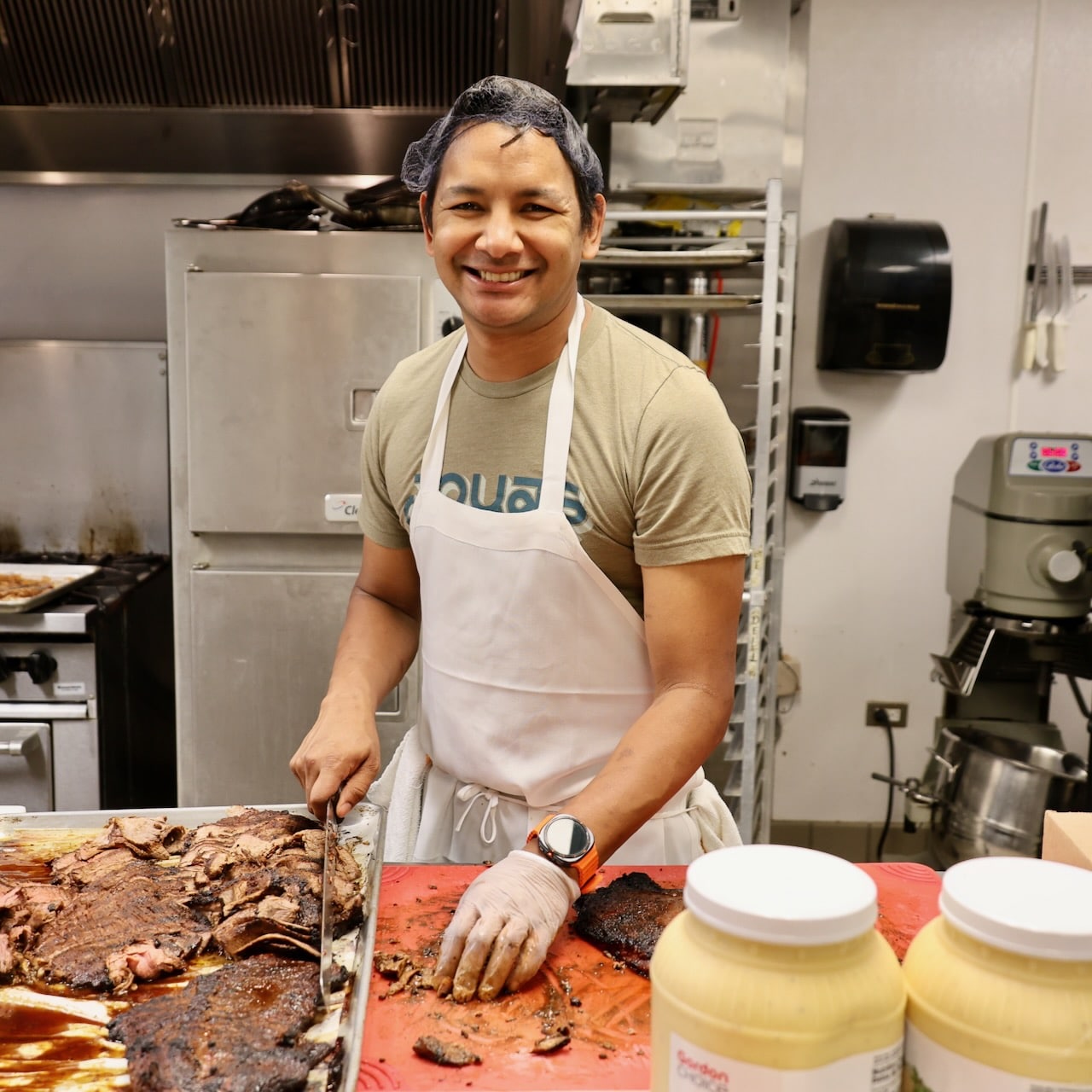
“People say ‘you have this training, you should be serving fancy food,’” he said. “Well, I made a version of a cheesy gordita crunch, and that’s what somehow got the attention of Food & Wine magazine.”
That down-to-earth philosophy is part of why he’s chosen to build his businesses in central Ohio, he said. He’s a believer in great food coming from humble places, whether that’s a cafeteria, a fast-food restaurant, a soup kitchen, or someone’s backyard.
“The best thing I’ve ever had in my life is a pond shrimp,” he said.
On a trip to his parents’ village in Bangladesh, he was offered shrimp from a local’s backyard pond. Knowing his host sold the shrimp to feed their family, he initially declined. His host was offended until Avishar realized how much it meant for them to take care of a guest. He accepted the shrimp with gratitude, and he remembers the day as a formative experience.
Over the years, Avishar has looked for ways to harness that giving spirit in his hometown. When a Columbus church asked his restaurant to help feed unhoused neighbors in the early pandemic, his entire team stepped up to prep and deliver chef-quality boxed meals.
Now, Avishar is hoping that volunteering with MOFC will encourage other culinary leaders to find ways of giving back. As he knows from experience, food is a natural place to start.
“With food, it’s straightforward. I might not be able to deliver a philosophical lecture that’ll change your life, but I can give you a biscuit with gravy on it,” Avishar said. “Giving is an act. It’s not passive. It’s very special and it seems to come by birth with who you are. It starts with small acts.”